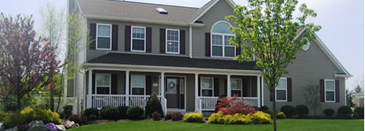

How To Choose A Builder

October 15th, 2008

When it comes to building your new home, you have many decisions to make.  One of the most important is choosing your builder.  Doing some light research on your builder by contacting references, visiting past projects and asking questions can make the difference between a nightmare and a dream experience.  Some of the qualities to look for in a builder are longevity in the business, quality of the product, customer service and reputation.  By considering each of the topics below, you will be able to choose the builder that’s right for you.

Longevity:  Look for a builder that has “been around the block”.  With longevity comes experience, expertise and knowledge.  Visit completed projects and projects under construction and talk to homebuyers about their experience. 

Quality:  Any builder should be able to slap a house together, but the quality of material and workmanship make the difference between a nightmare and a dream.  Make sure you ask your builder about the materials they use and the unique practices that make them stand out among other home builders.

Customer Service:  There’s nothing worse than realizing you’ve purchased a defective product without some kind of warranty.  Any good builder stands by their product with a detailed warranty.  Make sure you understand the warranties on the home you are buying to avoid any headaches.  Ask your builder to explain the customer service process and to give you a copy of the warranty to review before you purchase your new home.

Value:  Unless you go to a Custom Home Builder, which is generally significantly more expensive, most builders limit your customization options.  This can be frustrating since every home buyer has their own individual needs and wants.  Make sure you find out from your builder if they allow customization and design flexibility, such as moving wall, adding a window or flipping the footprint of the house.  Also find out about special packages that can be purchased to include upgrades, which can be a much greater value than individual upgrades. 

Answers to Common Home-Buying Questions

August 4th, 2008

Q:        Shouldn’t I wait until home prices go even lower to buy?


A:        No. Just as no one can accurately predict the peaks and valleys of the stock market (name one person who sold their tech portfolio in April of 2000), the same holds true for housing. If you wait for what you think is the absolute best deal, you could end up waiting for years. All the market fundamentals show that now is a good time to buy – prices are down, interest rates near historically low levels, and there are lots of homes to choose from.


If you buy now, you will not only be in the driver’s seat during the buying process, you will also reap the gains of price appreciation. Remember, those who purchased homes in the early 1990s during the last big economic and housing downturn came out as big winners.


Q:        Doesn’t it make sense to wait out the market until I can get the same price on my home that my neighbor got when he sold a year ago?


A:        No. It’s always better to trade up in a buyer’s market. While the value of your house has fallen, the prices of higher-end homes have also dropped. Here’s an example:


Your neighbor sold for $300,000. Let’s say values in your area have dropped 10 percent, so you could get only $270,000 for your home today. You have your eye on a move-up home that previously sold for $500,000, but now is selling for $450,000. If you sold your home today for $270,000 and purchased the larger house for $450,000, the difference in price would be $180,000.


But if you waited to recoup the 10 percent value on your home and sold it at $300,000, chances are the move-up home would also increase in price 10 percent to $500,000. That’s a $200,000 price difference. So by selling today, you would actually save $20,000.


Q:        Interest rates keep going down. Shouldn’t I wait until they go even lower before I buy a home?


A:        Interest rates for 30-year, fixed-rate mortgages are currently below 6 percent and are extremely favorable for buyers. In fact, they are hovering near 30-year lows. But waiting to time the market is a dangerous game. Even those who follow the market for a living can’t figure out when interest rates will bottom out. If they could, they would all be multi-millionaires.


            And home prices don’t necessarily move in unison with interest rates. So, if you decided to wait to purchase a home and the price dropped $10,000 from where it is today, you could still end up losing money. How? If interest rates were to move up by a half-a-point during this period, the savings on the reduced home price would be more than offset by the higher monthly payment you would be making over the life of the loan.


Q:        I have $10,000 to invest. Should I put that money in the stock market or buy a home?


A:        Purchasing a home is by far the best long-term investment. For example, say you use that $10,000 to purchase a $250,000 home, and the house appreciates a modest 3 percent during the first year. That means after one year, the house would be worth $257,500 – a gain of $7,500. By contrast, putting the same $10,000 in the stock market and posting a similar 5 percent gain would only net a $500 return on investment.


And don’t forget the tax incentives. In most instances, all of the mortgage interest and property taxes you pay in a given year can be fully deducted from your gross income to reduce your taxable income. These deductions can result in thousands of dollars of tax savings, especially in the early years of the mortgage when interest makes up most of the payment.


Q:        I’m a first-time buyer and still can’t afford the type of home that I want. Is it best to wait, keep renting, and hope that prices will get even lower?


A:        If you continue to wait, you may never be able to afford to get into the housing market. Even as home prices are currently moderating or falling, depending on where you live, rents continue to climb. When you buy a home, you are also purchasing price stability, knowing that you will pay the same monthly payment for the life of your 30-year, fixed-rate mortgage.


Once you become a home owner, you are able to take advantage of the tax deductions that homeownership offers, and you begin to build equity in your property.


With so many homes on the market to choose from, your best strategy may be to scale back expectations for your dream starter-home. After a few years, you can use those equity gains to sell your starter home and move into a bigger house. The sooner you make the jump from renter to home owner, the quicker you begin to create and build up wealth for your family.


National Association Of Home Builders


Is Buying A Home In Today’s Economy A Good Idea?

August 4th, 2008


IS BUYING A HOME


IN TODAY’S ECONOMY A


GOOD IDEA?


As a long-term investment, homeownership is still one of the best investments for individual households.

            “Why” you may ask? After all, the headlines say the housing market is down and out, with defaults rising at an alarming rate, and mortgage markets so frozen that buyers can’t get a home loan at any price.

            What buyers need to realize is that housing markets, like all markets, inevitably have their ups and downs. And homeownership has a track record that is virtually unmatched by any other purchase in terms of its real benefits.

            Despite the turmoil in mortgage lending, if you have good credit, a job and steady income, you will find there is still plenty of mortgage credit to be had at good rates. For well-qualified buyers, rates are running at near historical lows.


Homeownership’s Real Value

            Here are a few examples of why, dollar for dollar, homeownership is a solid stepping stone to a future of financial security and the single largest creator of wealth for many Americans.

            Over the long-term real estate has consistently appreciated, even through periodic adjustments in local markets in response to economic conditions. On a national level, home appreciation has historically increased 5-6 percent annually, report economists at the National Association of Home Builders.

            Five percent may not seem much at first, but here’s an example that will put it into perspective: Say you put 10 percent down on a $200,000 house, for an investment of $20,000. At a 5 percent annual appreciation rate, that $200,000 home would increase in value $10,000 during the first year. Earning $10,000 on an investment of $20,000 is an extraordinary 50 percent annual return.

            In contrast, putting that $20,000 down payment into the stock market and getting a 5 percent gain would only yield a $1,000 profit.


Compared to Stocks

Looking at it another way, over a longer period of time, if someone put $10,000 into the stock market in 1996, the average annual S&P return would make that investment worth $21,500 today—an increase of $11,500. The median home price in 1996 was $140,000.

Today, that same home would have gained nearly $100,000 in value. Don’t miss out on the benefits of homeownership.


www.nahb.org


First-Time Home Buyer Tax Credit

July 30th, 2008

The National Association of Home Builders (NAHB) urges you to inquire about new legislation offering first-time home buyers a tax credit of $7,500.

  • The tax credit is available for first-time home buyers.
  • The maximum credit amount is $7,500.
  • The credit is available for homes purchased on or after April 9, 2008 and before July 1, 2009.
  • Single taxpayers with incomes up to $75,000 and married couples with incomes up to $150,000 qualify for the full tax credit.
  • For more information, visit www.federalhousingtaxcredit.com


    ENERGY STAR® Concepts – How You Can Save Time And Money

    June 12th, 2008

    Did you know that there are several different ways you can create an energy efficient home, from the quality of products and materials used to the quantity of certain products?  Many new home buyers and homeowners might visit an ENERGY STAR showroom and expect their home to look exactly like what they see when it’s complete, but the truth is that there are many different combined choices that go into making a home an ENERGY STAR home.  These include, but are not limited to:

    Air-Sealing

    Air sealing is one method used to prevent the loss of heat in the winter and cool in the summer through unseen cracks.  This air (and your heating and cooling dollars) is lost in areas such as fireplaces, attics, basements, duct systems, doors and windows, plumbing systems, recessed lighting and electrical outlets.  Having drafts through these “cracks” can allow moisture to build up, which can result in mold and mildew, as well as structural damage.  This not only creates an uncomfortable living situation, but an unhealthy one.  Additional air sealing around windows and doors, plumbing and ventilation systems, and electrical outlets can eliminate the loss of air and help your home perform more efficiently.  A “blower door” test (which is part of the HERS score) is performed on every ENERGY STAR home to detect air loss and to ensure greater energy efficiency.

    Insulation

    The type (or the R-value), the amount and the placement of insulation in a home can result in very different HERS (Home Energy Rating System) scores.  The R-value measures the efficiency of the insulation, so a higher R-value equals a more energy efficient home.  Added insulation in floors, walls and ceilings can not only help the energy efficiency of a home by further blocking air from being unnecessarily expelled, but it also acts as a sound buffer.  

    Mechanical Ventilation

    Although ENERGY STAR homes try to eliminate air loss by making seams tight, the air inside of the home needs to circulate to prevent stale air and, consequently, mold and mildew from forming indoors.  This is accomplished by installing some type of ventilation system.  The different levels of ventilation include exhaust-only, simple balanced ventilation and heat-recovery ventilation.  


    • Exhaust-only - provides a way for indoor air to be sucked out, while new air comes in naturally through open doors and windows, and small cracks.
    • Simple balanced ventilation allows indoor air to be expelled, as well as brought back into the home to create more a controlled air-exchange.  
    • Heat-recovery ventilation performance is similar to the simple balanced ventilation, but it goes one step further by preventing heat from being expelled for the air exchange.


    The difference between the three systems above is the resulting HERS score and utility costs, as well as the comfort and health of the home.

    High-efficiency Appliances & Lighting

    Energy Star appliances allow homeowners to save money, conserve natural resources, and protect the environment by performing more efficiently than traditional appliances.

    • Washers & DryersENERGY STAR washers use 55% less energy and 50% less water, and use a much more effective spin cycle, which decreases the drying time.  
    • Refrigerators & Dishwashers ENERGY STAR refrigerators offer the same conveniences of conventional refrigerators, but use half the energy.  ENERGY STAR Dishwashers clean more effectively, but use less energy and water.
    • LightingENERGY STAR light fixtures and bulbs use less energy and last significantly longer than regular light bulbs, while they still provide natural and even lighting to a home. 

    Windows

    Aside from increased air sealing and insulation around windows, the actual windows used in building a house can significantly reduce energy costs, as well as increase comfort.  Windows with Low-E glass (in the form of gas-filled glass or special Low-E coatings) limit solar heat gain without reducing the visibility.  These energy efficient windows are also temperature resistant in that the glass and frames won’t get too cold or hot to the touch in extreme weather.  Another positive aspect to the Low-E windows is the resistance to ultraviolet rays which can cause fading of furniture and flooring materials.